Introduction
Picture a company where the organizational chart isn't just a picture on the wall. Instead of names on paper, each box holds a real, always-on employee who actually does the work — answering emails, fixing bugs, chasing down invoices, and reporting back to a manager who keeps everything on track. This is no longer science fiction. With a tool called Grok Bot, launched in August 2026, you can build exactly this kind of team of AI agents that talk to each other, hand off work, and coordinate toward a common goal.
The idea sounds almost too simple: you message an AI teammate the way you'd text a colleague, and it gets work done. But the part that's changing the game is what happens next. These bots don't work in isolation. They form a small organization, each with a name, a job, and its own computer, and they communicate with one another to accomplish tasks no single bot could do alone. This article explains how Grok Bot works, how it can create real organizational hierarchies, and what this means for the way we work.
What Happened
On August 11, 2026, xAI — the company behind the Grok AI assistant — launched Grok Bot, which it describes as "your team of always-on agents." Unlike most AI tools that wait for you to type a question and then produce an answer, Grok Bot gives each agent its own persistent computer in the cloud. This means a bot can sign into the same tools and apps you use — your email, your CRM, your code editor, your spreadsheet — and keep working even after you close your laptop.
The technology arrived by an unusual path. According to xAI, Grok Bot was originally built as an internal prototype to help the company manage its own workload. It worked so well that teams inside the company began creating bots for nearly every function: handling sales outreach, running marketing campaigns, processing office operations, and fixing software bugs. The internal demand became so large that xAI decided to open the product to the public.
"A sales Bot updating the CRM with call transcript notes and drafting follow-ups, an ops Bot seating new hires and processing invoices received in Gmail, and an engineering Bot reproducing a bug in the product UI, filing the ticket, and handing the fix off to a debugging Bot." — xAI, Introducing Grok Bot
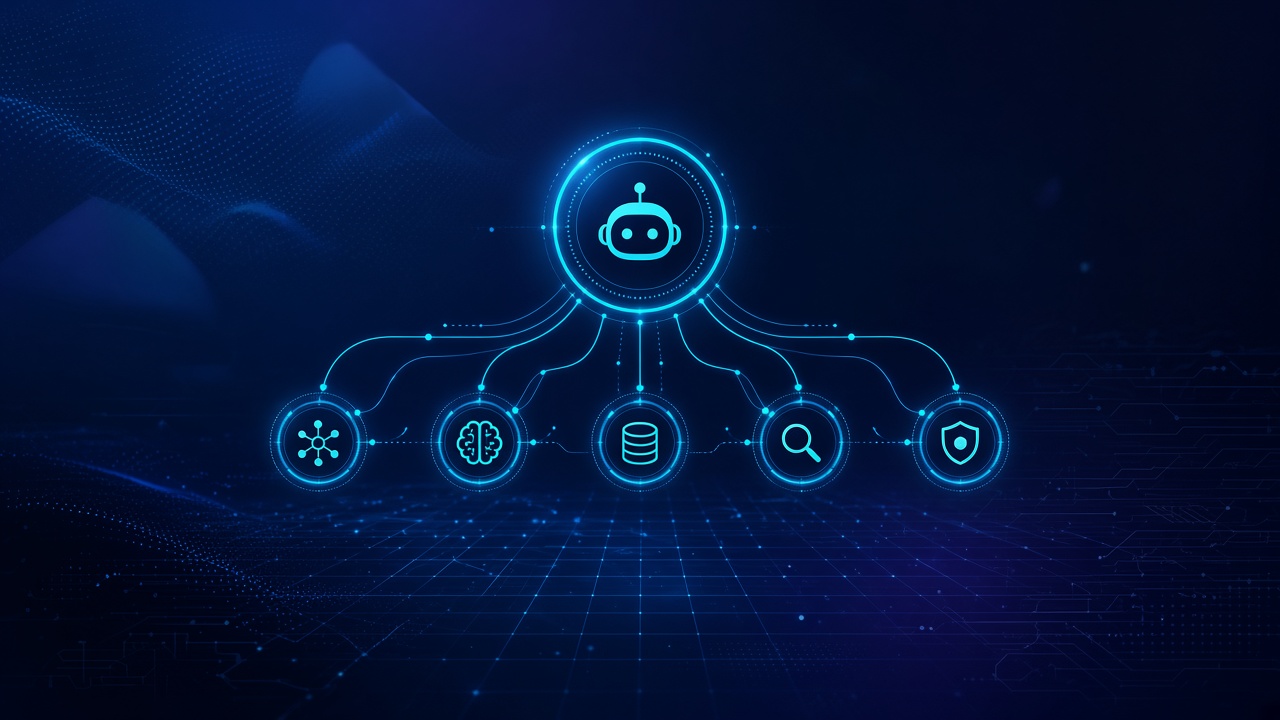
The most striking detail is how these bots work together. xAI describes internal teams running "multiple Bots in parallel, with one to manage the others." A bot positioned like a "chief of staff" sits at the top, with a specialist bot for each area of work. Instead of the human having to juggle multiple separate agents, they get a small team that can work in parallel so they're "not the middleman."
Grok Bot is available now through SuperGrok subscription plans and Cursor Pro, Pro+, and Ultra plans. It works on desktop (macOS) and mobile (iOS and Android), and it comes with its own separate usage meter, so the work you hand to a bot doesn't count against your existing AI tool subscriptions. xAI is also offering a free trial and has a waitlist for enterprise customers.
How It Actually Works
To understand how Grok Bot can build a real organizational hierarchy, it helps to understand the mechanics behind the scenes. The system rests on a few key ideas.
1. Each bot has its own job and its own computer
When you create a bot, you give it a name, a picture, and a job description that explains what it does. The bot then gets its own cloud computer where it can browse the web, edit files, and use applications — just like a person sitting at a desk.
2. Bots can message each other directly
When a bot finishes one part of a task and needs another bot to continue, it can send that bot a message. These messages appear in each bot's own private chat, allowing work to be handed off smoothly without human intervention.
3. Bots can work together in group chats
Just like a real team conversation, you can place multiple bots in a group chat. They can discuss a project, pass work back and forth, and assign ownership of tasks. They stay aligned on the same goal without you having to copy notes between different chats.
4. A human stays in control of important decisions
Bots cannot see passwords, and they require human approval for irreversible actions like sending money or changing security settings. The idea is that bots handle the routine work and only pull a human into the conversation when a judgment call is needed.
Building a Real Company Org Chart
Here's where the concept becomes powerful. In a traditional company, an org chart is a static diagram showing who reports to whom. With Grok Bot, you can turn that diagram into a functional team. Let's imagine a small online store that wants to automate a big chunk of its daily work.
Handles CRM & follow-ups
Runs campaigns
Processes invoices
Answers customers
Fixes website bugs
Each bot has a clear role, and the "Chief of Staff" bot coordinates the others. Here's what a typical day might look like as these bots communicate with each other:
- The Marketing Bot runs a weekend promotion and notices a spike in customer questions about shipping times. It messages the Support Bot directly: "Customers are asking about delivery. Can you prepare a standard reply about our shipping policy?"
- The Support Bot drafts the reply, checks it against the store's policies, and posts it in the group chat for the Chief of Staff to review. It doesn't send anything without approval.
- The Sales Bot notices the promotion drove new sign-ups and updates the CRM with fresh leads, then messages the Chief of Staff: "New leads logged, ready for outreach."
- The Operations Bot receives several supplier invoices in Gmail, verifies the amounts, and queues them for payment — but pauses and asks the human for approval before any money moves.
- The Engineering Bot finds a broken checkout button, reproduces the problem, files a ticket, and hands the fix to a debugging bot, then reports the result back to the team.
The result is a team that works 24/7, coordinates without the human needing to mediate every step, and escalates only the decisions that truly need a person. This is the difference between a collection of tools and an actual organization.
Practical Examples: Imagine You Are...
Let's make this concrete with three everyday scenarios that anyone can picture.
Imagine you run a small law firm
You have a "Document Bot" that reviews contracts for missing clauses, a "Calendar Bot" that schedules meetings and sends reminders, and a "Research Bot" that summarizes new laws relevant to your practice. When the Calendar Bot spots a scheduling conflict, it messages the Document Bot to hold a deadline, and both report the conflict to you through the Chief of Staff. Instead of three separate programs you have to check, you have one coordinated team.
Imagine you own a restaurant
Your "Inventory Bot" checks ingredient levels every morning and messages the "Supplier Bot" when stock runs low. The Supplier Bot drafts an order and sends it to your preferred vendor, then the Operations Bot records the expense. If a supplier raises prices, the whole chain adjusts automatically, and you get one summary message at the end of the day.
Imagine you're a freelance designer
Your "Client Bot" handles initial inquiries and books discovery calls, your "Invoice Bot" sends bills and follows up on late payments, and your "Portfolio Bot" posts new work to your social channels. When a client approves a design, the Client Bot notifies the Invoice Bot to send the deposit, and the Portfolio Bot prepares a preview. You focus on designing; the team handles everything around it.
Use Cases Across Industries
The model of communicating bots coordinated by a manager fits many different kinds of work. Here are several real applications:
- Sales and CRM management: A team of bots can handle outbound outreach, log every interaction in your CRM, draft personalized follow-ups, and flag hot leads for your salespeople — all while the manager bot prioritizes which leads to chase first.
- Customer support: Bots can triage incoming tickets, resolve common questions automatically, and escalate complex issues to humans with full context already prepared. This is exactly how xAI itself now runs its support operation.
- Finance and operations: Invoices can be received, checked, and queued for payment. Expenses can be categorized. Reports can be compiled from multiple sources and handed to a manager bot for review before they reach management.
- Software development: A whole software team can be simulated — a bot writes code, another reproduces bugs, a third files tickets, and a fourth reviews the fix. Each bot knows its lane and hands work to the next in line.
- Marketing: A campaign can be built across several bots: one writes copy, another designs assets, another schedules posts, and another monitors the results and reports back to the manager bot, which adjusts the strategy in real time.
- Recruiting: Bots can screen applications, schedule interviews, send candidates information, and feed qualified prospects to your HR team — coordinated so nothing falls through the cracks.
What the Real World Is Already Doing
The most compelling evidence for this model comes from xAI itself. In September 2026, the company published a case study showing how it rebuilt its combined support operation for both its products around Grok Bot.
"Our new combined team has seen a 175% increase in support tickets, but we have not had to hire any new people thanks to Grok Bot. We might have hired 200 additional people otherwise." — xAI, How SpaceXAI is using Grok Bot to scale customer support
The company reports that it was able to resolve support tickets for as little as $0.20 to $0.30 each, compared to the $1 to $4 that traditional AI support tools charge. It took a careful approach: starting with simple tickets, manually reviewing the bots' work at first, and gradually expanding what the bots could do on their own. Along the way, the bots were given their own feedback loop — they could analyze their own runs, spot where they went wrong, and improve. This mirrors a key principle from Grok Bot's own documentation: build a verification loop before you trust the system, and keep a human gate on anything irreversible.
The Road Ahead: Future Scenarios
Where does this technology lead? Let's think about the near, medium, and long term.
Short-term (1-2 years)
Small teams and even individuals will routinely run "micro-companies" of bots. A solo entrepreneur might have a team of five coordinated bots doing the work of a dozen employees. Most people will interact with these teams through simple chat, never touching a complex interface.
Mid-term (3-5 years)
Organizational structures will become software you can design and rearrange. Companies may maintain "virtual departments" that run alongside human teams, with clear lines of who reports to whom. Human managers will spend less time coordinating and more time setting direction and making judgment calls.
Long-term (10+ years)
If current trends hold, AI organizations could become complex enough to manage entire industries' back-office work. The question will shift from "Can AI do this task?" to "How should humans and AI organizations be structured?" — a question about management, ethics, and society rather than just technology.
How This Technology Evolves
The ability for bots to communicate with each other builds on years of progress in AI agent research. Earlier AI models could answer questions, but they worked in isolation and forgot everything once a conversation ended. Newer systems add three things: memory (remembering past work and your preferences), tools (the ability to actually use software, not just talk about it), and coordination (the ability to pass work between multiple agents).
Grok Bot combines all three. Its bots share a persistent computer, remember their conversations, and can message each other. This mirrors a broader trend in the industry, where researchers are studying how multiple agents can collaborate effectively — much like a real company — rather than relying on a single powerful model to do everything. The "chief of staff" pattern, where one agent coordinates others, is becoming a common design in this field.
A Balanced View: Benefits and Risks
Like any powerful technology, building company-sized teams of AI agents brings both promise and risk. Here's a balanced look at both sides.
The Positives
- 24/7 productivity: Bots never sleep, take breaks, or go on holiday. Work that used to take days can happen continuously.
- Handling repetitive work: Routine, tedious tasks — data entry, invoice processing, scheduling — can be freed up for humans to do more meaningful work.
- Scaling without hiring: As xAI's case study shows, a small team can handle dramatically more work without proportional increases in headcount or cost.
- Consistency: Bots follow the same standards every time, reducing the errors that come from tired or distracted human workers.
The Risks
- Loss of human oversight: If bots work too autonomously, mistakes can compound before a human notices. The verification loop and human approval gates are essential safeguards.
- Account vagueness: When a team of bots makes a mistake, it can be unclear who — or what — is responsible. Clear ownership and human accountability must be preserved.
- Security and privacy: Bots that sign into real tools and access real data create new attack surfaces. Passwords, permissions, and data access must be carefully controlled.
- Job displacement: As bots handle more roles, some jobs will change or disappear. Society will need to focus on retraining and adapting the workforce.
Conclusion
Grok Bot represents a fundamental shift in how we think about artificial intelligence. We've moved past the era of AI as a tool you ask questions to, into an era of AI as a teammate you work alongside — and, increasingly, a team you can build. The ability to create real organizational hierarchies of agents that communicate with each other, coordinated by a manager bot, turns the org chart from a static diagram into a living, working organization.
Of course, this power comes with real responsibilities: oversight, accountability, security, and fairness must be built in from the start. But the potential is enormous — a small business could gain the equivalent of a whole staff, and a large company could handle work that once seemed impossible without massive hiring.
The question is no longer whether AI can do individual tasks well. It's how we'll organize ourselves and these new digital colleagues. As xAI's own experience shows, once you see a team of bots coordinating on their own, you start to wonder how much of your own work could run the same way.
Sources
- "Introducing Grok Bot" — xAI official launch announcement, August 11, 2026
- "How SpaceXAI is using Grok Bot to scale customer support" — xAI case study, September 22, 2026
- "Group chats and Bot-to-Bot messages" — Cursor Help documentation
- "Grok Bot overview" — Official xAI documentation
- "Message and collaborate" — Official xAI documentation on bot-to-bot communication