The Story That Should Make Every AI Enthusiast Pause
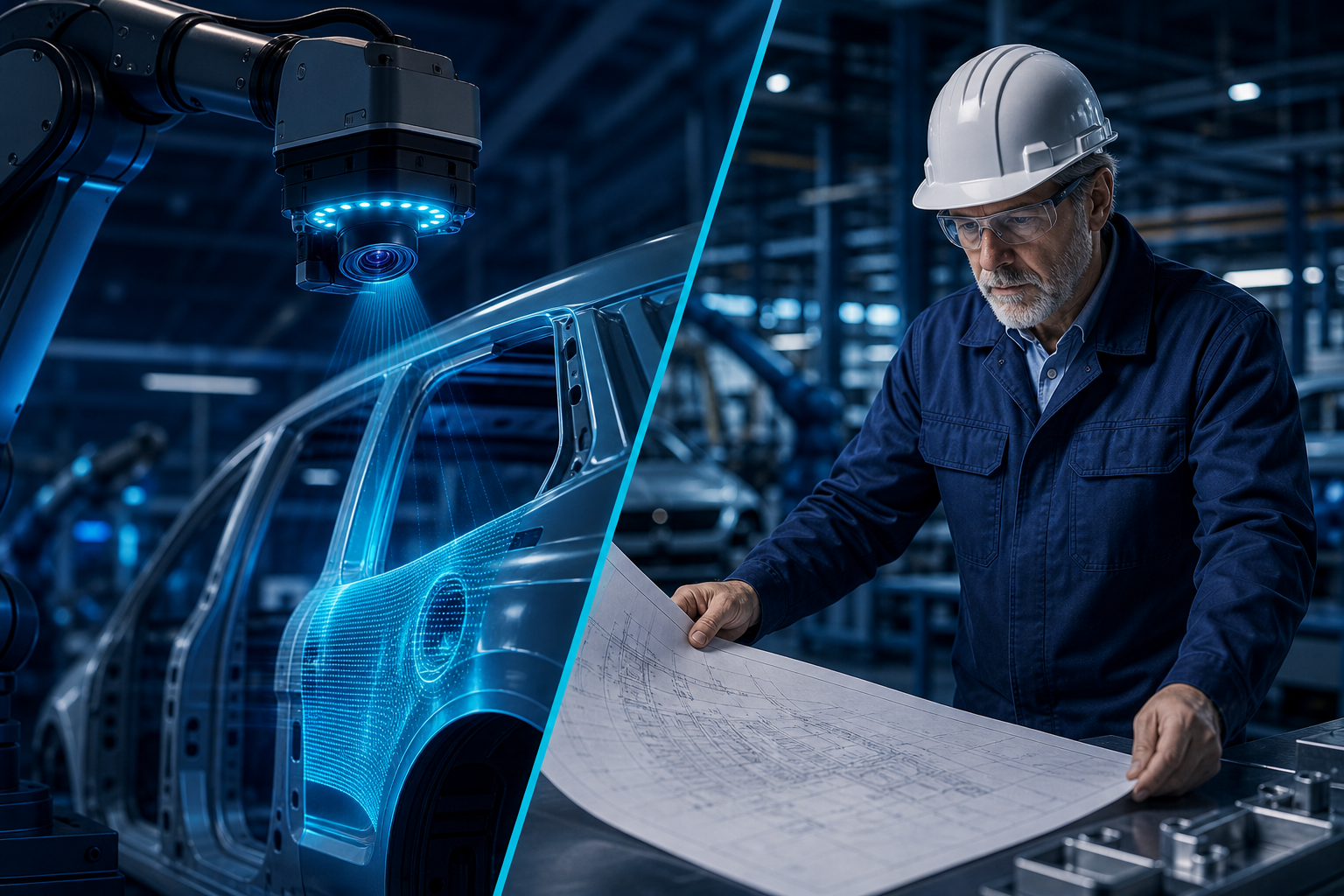
In the summer of 2026, Ford Motor Company did something that sent shockwaves through the technology and manufacturing worlds: it admitted that artificial intelligence was not ready to do the job it had spent years and billions of dollars trying to automate, and it brought back 350 veteran engineers to fix the mess.
This is not a story about AI being "bad" or "good." It is a story about a company that pushed a transformative technology too far, too fast, and learned the hard way that some kinds of expertise cannot be compressed into algorithms. The implications stretch far beyond Dearborn, Michigan. Every industry currently racing to automate quality control, customer service, creative work, and decision-making should be watching closely.
Why this matters to you: Whether you work in manufacturing, tech, healthcare, or any field that claims AI will transform it, the Ford reversal tells us something crucial about the gap between AI's potential and its current reality. It affects jobs, product quality, and how we should think about the pace of technological change in our own lives.
What Happened: The Details Behind the Headline
The timeline starts with a quiet realization inside Ford's engineering divisions. Over the preceding months, the company's reliance on AI-driven automated verification tools was producing outcomes that fell short of expectations. Parts that should have been caught before reaching assembly lines slipped through, quality issues emerged that the automated systems had been designed to prevent, and the gap between promise and performance was widening.
According to reports published on June 28, 2026, Ford responded decisively: it recruited 350 seasoned professionals to address the quality gaps. The cohort includes former Ford employees and supplier workers, many of them with decades of experience in automotive engineering. Management referred to them as "gray beard" personnel -- the industry's affectionate (and slightly self-deprecating) term for veteran engineers whose gray hair is taken as a badge of accumulated wisdom.
These engineers are not returning to replace AI entirely. Ford's leadership is explicitly not abandoning its machine learning initiatives. Instead, the strategy is one of augmentation and correction: deploying these veterans to mentor newer developers, refine the algorithmic programming that the company already uses, and critically, to hunt for failure points that the AI systems are missing.
"Mistakenly we thought that by just introducing artificial intelligence and ingesting the design requirements that we had, that would produce a high-quality product."
— Charles Poon, Ford Vice President of Vehicle Hardware Engineering
Charles Poon, Ford's hardware vice president, offered what amounted to a rare public admission that AI was not the silver bullet it was marketed as being. His statement -- that simply feeding design requirements into an AI system was not enough -- cuts against the narrative pushed by many technology vendors and consultants over the past half-decade.
Kumar Galhotra, Ford's chief operating officer, described the initiative as bringing back technical specialists whose job would be to "hunt for failure points before a part ever reaches the plant floor." This language is telling: the problem was not that AI produced defective parts directly, but that the automated systems failed to catch defects that human inspectors would have identified immediately. The blind spots were in the verification, not the creation.
CEO Jim Farley framed the financial upside in blunt terms, noting that the quality improvements contribute "literally hundreds and hundreds of millions of dollars of a tailwind for Ford on cost." The number is significant. Warranty claims and recall rates dropped measurably after the veteran engineers returned to their roles, suggesting that the cost of the AI overreach -- in rework, warranty work, and potential recalls -- was substantial.
The results have been tangible. Ford's quality improvement strategy, built around this human-AI hybrid model, recently propelled the company to the top rank in the latest JD Power Initial Quality Survey within the mainstream automotive segment. This is a meaningful achievement in an industry where quality rankings are hard-won and closely contested.
What makes this story particularly notable is not just what Ford did, but the context: the company did not simply adjust its approach incrementally. It reversed course significantly enough to require a massive hiring initiative -- 350 engineers is not a pilot program, it is a strategic realignment.
What This Means in Real Life: Concrete Examples
Let us make this concrete. Here are three scenarios that illustrate what the Ford situation means for everyday people:
Imagine you are buying a new Ford vehicle. A few years ago, the quality inspection on your car was handled largely by automated systems -- cameras, sensors, and algorithms trained to detect defects in materials, assembly, and fit. These systems worked well in controlled environments but missed subtle problems that experienced human inspectors catch instantly: a paint finish that looks right on a monitor but feels slightly off to a trained hand, a panel gap that is technically within specification but suggests underlying tension in the assembly process, a wiring harness routed in a way that will cause wear after three years of daily use.
Imagine you work at a Ford dealership handling warranty claims. When the AI systems were doing most of the inspection work, a number of defects slipped through the cracks and showed up later as customer complaints. Windshield wipers that cracked prematurely, suspension components that wore faster than expected, electrical connectors that failed in extreme temperatures. Each one is a cost, a frustrated customer, and a reputational hit. With veteran engineers now catching issues at the factory, those post-purchase problems should decline.
Imagine you are a supplier to the automotive industry. Your company may have invested heavily in AI tools to meet Ford's quality specifications. The reversal does not mean those investments are wasted -- Ford is not abandoning AI. But it does mean the quality bar is being recalibrated. The AI tools will need to be refined, retrained, and integrated with human judgment rather than replacing it entirely. Suppliers who understood that human oversight remains essential will adapt more smoothly.
Where AI-Human Hybrid Models Work (and Where They Shouldn't Replace Humans)
The Ford story is not anti-AI. It is a case study in how AI works best when paired with human expertise. Here are four sectors where this hybrid approach is already showing promise:
Healthcare diagnostics. Radiologists using AI-assisted imaging tools consistently outperform either AI alone or human radiologists alone when evaluating complex cases. The AI flags anomalies at speeds no human can match; the radiologist provides contextual understanding -- patient history, symptom patterns, the "feeling" that something is off even when the image looks clean. The most effective healthcare systems treat AI as a second pair of eyes, not a replacement for the doctor.
Agriculture and food safety. AI-powered sorting systems can process thousands of produce items per hour, identifying damage, disease, and ripeness. But veteran agricultural inspectors still catch issues the algorithms miss: the early stages of a fungal infection that have not yet produced visible symptoms, the subtle taste and texture variations that indicate quality problems. Companies combining AI sorting with human oversight report significantly fewer customer complaints and less food waste.
Software development. AI coding assistants like GitHub Copilot have transformed how developers write code. They are remarkably good at boilerplate, pattern matching, and catching obvious bugs. But experienced engineers are still essential for architectural decisions, edge-case handling, and understanding how code interacts with business logic. The most productive software teams use AI as a co-pilot -- the human remains in control, directing the journey.
Legal document review. AI can review thousands of contracts, discovery documents, and compliance filings in hours. But complex legal situations require understanding nuance, intent, and context -- skills that come from years of practice and a deep understanding of how laws are actually applied by judges and juries. Law firms that combine AI efficiency with senior lawyer judgment deliver better outcomes at lower cost.
The pattern across all these sectors: AI excels at pattern recognition at scale. Humans excel at judgment under uncertainty. The best results come from combining both.
What Comes Next: Short, Medium, and Long-Term Scenarios
The Ford reversal does not mean AI will fail. It means the timeline and nature of AI integration will evolve differently than many predicted. Here are three scenarios:
Short term (1-2 years): Expect more companies like Ford to audit their AI deployments critically. The "AI first" impulse of the past few years will give way to more pragmatic "AI plus human" approaches. Industries that moved fastest to automate -- customer service, content moderation, basic data analysis -- will see the most corrections. We will likely see a wave of AI tool refinement: better training data, more careful deployment, and a growing recognition that quality control and complex decision-making require human-in-the-loop systems.
Medium term (3-5 years): The companies that adapt best will be those that build AI-augmented workflows from the ground up rather than trying to retrofit AI onto existing processes. This means designing systems where human expertise and AI capability reinforce each other, not where AI is layered on top of human work expecting it to eliminate the need for humans entirely. Manufacturing will evolve toward what some call "cognitive factories" -- production environments where AI handles routine inspection and monitoring while engineers focus on process improvement, innovation, and the kinds of creative problem-solving that AI cannot replicate.
Long term (10+ years): If AI continues to improve at its current pace, we may see genuine transformation in how manufacturing and quality control operate. But the Ford lesson suggests this transformation will be evolutionary rather than revolutionary. Even in a world of advanced AI, there will always be edge cases, novel problems, and judgment calls that require human experience. The question is not whether AI will replace humans in industry -- it is how we design systems that combine the best of both.
The Technology Evolution: Where AI Quality Systems Go from Here
The AI systems that Ford relied upon were built on the same principles driving AI adoption across industries: machine learning models trained on historical data, designed to identify patterns associated with defects and quality issues. These systems work remarkably well when the conditions they were trained on match the conditions they encounter in production. The problem arises at the margins -- when a defect is subtle, novel, or requires understanding context that was not in the training data.
Related developments suggest the path forward. The next generation of AI quality systems will likely incorporate "simulated experience" -- training data that includes not just what defects look like, but why they occur, how they evolve over time, and what underlying conditions produced them. This moves AI from surface pattern recognition toward causal understanding, which is closer to how human experts actually think.
Another promising direction is the integration of multiple AI modalities. Current systems often analyze images, sensor data, and text separately. Combining these inputs in a unified model -- much like a human inspector uses sight, touch, sound, and institutional knowledge simultaneously -- could dramatically improve accuracy. The technology exists to explore this; what is needed is the investment and organizational willingness to treat AI as a system to be refined rather than a product to be deployed.
Implications: The Positives and the Risks
Positive Implications
1. The human-AI partnership model wins. Ford's story provides a powerful, real-world example that AI works best as an augmenting tool rather than a replacement. This is good news for workers anxious about AI taking their jobs and for organizations looking to deploy AI responsibly.
2. Quality is non-negotiable. The fact that Ford prioritized quality over the AI narrative shows that corporate leaders can still make decisions based on results rather than technology trends. When the numbers showed that human oversight improved outcomes, Ford acted -- even though it meant admitting a strategic misstep.
3. The value of institutional knowledge is reaffirmed. In an era where companies rushed to modernize and optimize, the Ford story reminds us that decades of accumulated practical knowledge -- the kind you cannot find in a manual or a dataset -- has real economic value. Companies that invest in retaining and mentoring veteran workers will have a competitive advantage.
Negative Implications and Risks
1. The over-AI wave has real costs. Companies that over-invested in AI solutions at the expense of human expertise are now facing significant correction costs: wasted technology spend, retraining requirements, and the opportunity cost of delaying more effective solutions while pursuing the AI promise.
2. Worker displacement may have already occurred. Many companies used the AI automation narrative to justify workforce reductions before the technology was ready. The Ford situation suggests that some of those displaced workers may need to be rehired, but not all were -- and the talent loss is irreversible for many organizations.
3. The AI hype cycle continues to distort investment. When every technology vendor claims their AI product is transformational, companies struggle to separate genuine capability from marketing. The Ford case is one of the most clear-eyed public acknowledgments yet that AI hype can lead to poor strategic decisions. Other sectors -- healthcare, finance, education -- should heed this lesson before committing to AI solutions that may not deliver on their promises.
Conclusion: AI Is a Tool, Not a Substitute for Judgment
Ford's decision to bring back 350 veteran engineers is not a defeat for AI. It is a reminder that technology, no matter how advanced, cannot replace the accumulated wisdom of people who have spent their careers understanding the nuanced craft of their work.
The real question for every industry is not "Can AI do this job?" but "How can AI and humans work together to produce better outcomes than either could achieve alone?" Ford's answer -- invest in both, respect both, and let results, not ideology, guide the deployment -- is the model other companies should follow.
As AI continues to advance, the industries that thrive will be those that embrace it honestly: recognizing its strengths, acknowledging its current limits, and designing systems that combine the best of both worlds. The Ford story is not the end of AI's industrial journey. It is a chapter in a longer, more nuanced story that is still being written.
Sources