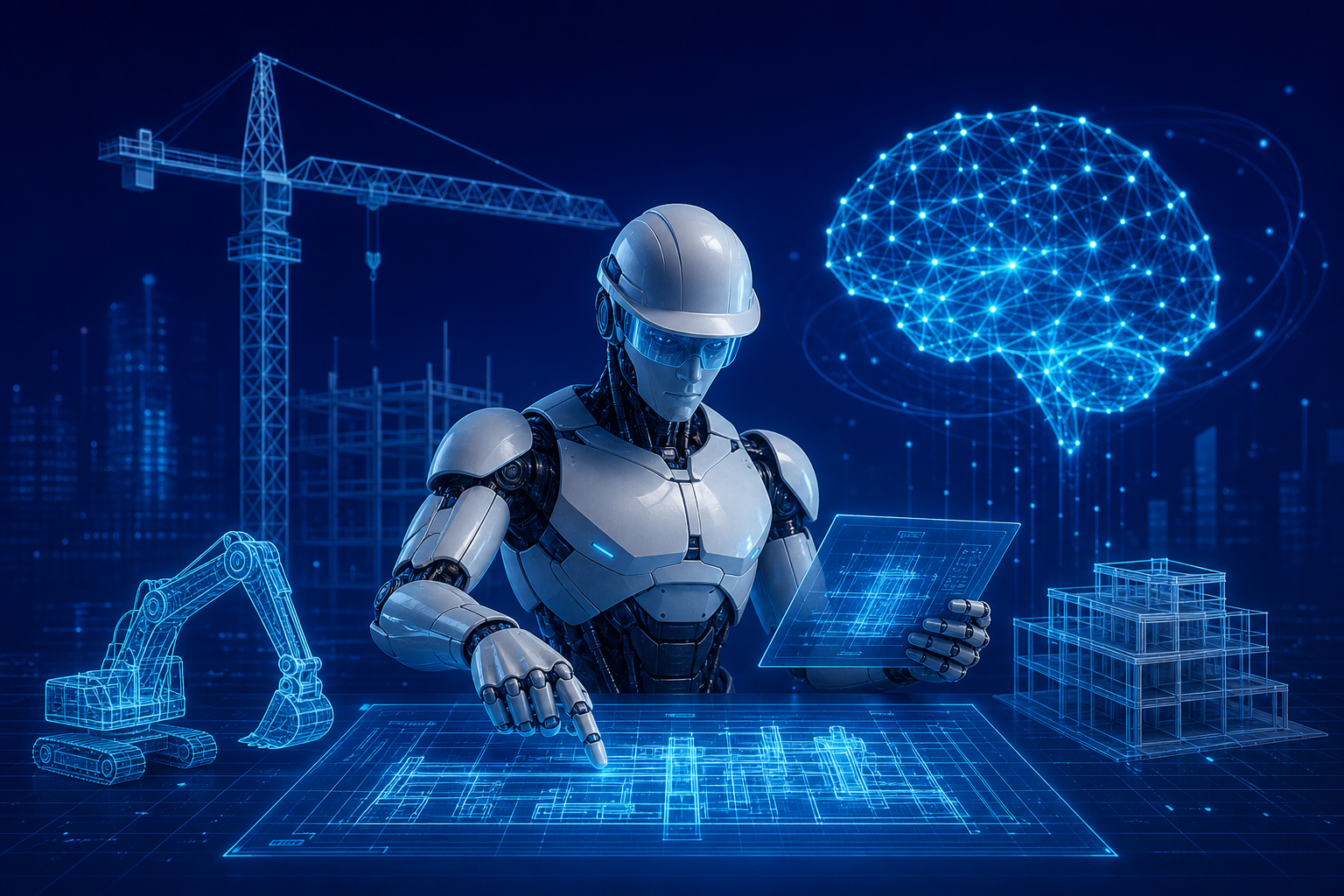
In a move that has sent shockwaves through the technology, robotics, and construction industries, Jeff Bezos's artificial intelligence venture Prometheus has reportedly secured $12 billion in funding as it pursues what it calls the most ambitious goal in the history of AI: building an "artificial general engineer" capable of autonomously designing and constructing complex physical environments.
For context, the entire global robotics market was valued at approximately $88 billion in 2024. Prometheus's single funding round represents more than 13% of that total. What the company is attempting has never been done at this scale: creating AI systems that don't just process information on a screen, but interact with the real world, understand physics, manipulate materials, and engineer structures from the ground up.
This is not an incremental improvement on existing robotics technology. It is a fundamental shift in what AI is expected to do. And it raises urgent questions about the future of work, the nature of engineering, and the boundaries between artificial and human intelligence.
What Happened: The Prometheus Announcement
On June 11, 2026, Prometheus formally announced its $12 billion funding round, positioning itself at the frontier of what experts call "embodied AI" — the effort to give artificial intelligence a body and the ability to operate in the physical world. The company described its mission as developing an "artificial general engineer," a system it defines as an AI capable of understanding, planning, and executing engineering tasks across any domain — not just in software, but in the real world.
What is AGI? "Artificial General Intelligence" (AGI) refers to a theoretical form of AI that possesses the ability to understand, learn, and apply knowledge across a wide range of tasks at a level comparable to human intelligence — unlike today's "narrow" AI, which excels at specific tasks like language, images, or games but cannot transfer those skills to completely different domains.
Prometheus's vision goes far beyond narrow AI. The company wants to build systems that can take a description — "design a bridge that spans 200 meters, withstands seismic activity up to magnitude 8, and costs less than $50 million" — and then generate the full engineering plans, select materials, coordinate construction sequences, and oversee the build, all without human intervention. Every step would be executed by AI-powered robotics.
The company was founded in early 2026 by a team of AI researchers and robotics engineers assembled by Bezos over the past two years. The initial team, estimated at fewer than 50 people, was drawn from leading AI laboratories and aerospace engineering firms. Despite its small size, Prometheus has already attracted attention from the world's largest technology and investment firms, who collectively committed the $12 billion in a remarkably condensed timeframe — reportedly less than two weeks of negotiations.
"Engineering is the application of science to design, analyze, construct, and maintain structures, machines, materials, processes, and systems. We believe an AI can eventually do all of this — not by mimicking a single engineer, but by learning what engineering actually is."
— Prometheus founding team
What makes this announcement particularly significant is the word "general." Every robotics system in operation today — from warehouse robots to surgical robots to construction-exoskeletons — is specialized. A Boston Dynamics spot robot can navigate rough terrain but cannot pour concrete. A KUKA industrial arm can weld precisely but cannot understand a blueprint. Prometheus's claim is that its system will be general-purpose: one AI architecture capable of performing every phase of an engineering project, from initial concept through material sourcing, design, and physical construction.
The $12 billion valuation, achieved in just days, underscores the enormous investor confidence in Bezos's vision and track record. Bezos founded Amazon in 1994 and built it into one of the most valuable companies in history; he also founded Blue Origin in 2000 to pursue space exploration. Prometheus represents the logical extension of his long-term thinking: creating systems that can build not just what humans need on Earth, but what humanity needs on other planets.
To put the funding magnitude in perspective, OpenAI's total funding to date is estimated at roughly $100 billion, and Google spent approximately $88 billion on capital expenditures in 2025 to build the data centers and chips needed for its AI workloads. Prometheus's single $12 billion round is comparable to the total funding of most major technology companies at their peak. The investors include several sovereign wealth funds, deep-tech venture capital firms, and prominent technology industry leaders who see embodied AI as the next trillion-dollar market — one that could surpass even the current AI software boom in total economic impact.
What This Could Mean in Practice: Three Concrete Scenarios
The concept of a general-purpose AI engineer can feel abstract. Here are three tangible scenarios that help illustrate what Prometheus is actually trying to achieve, and why it matters to anyone who interacts with the built environment.
Scenario 1: Emergency Disaster Housing
Imagine a devastating earthquake strikes a densely populated region. Roads are damaged, supply chains are broken, and thousands of people need shelter within days — not months. Today, that process involves complex logistics, government coordination, and temporary solutions that can take years to replace with permanent housing. With a Prometheus-style system, AI could analyze the terrain, design a modular housing layout using locally available materials, coordinate robotic teams to clear the land, mix building materials on-site, and construct a fully functional residential community in a fraction of the current timeline.
Scenario 2: Rural Infrastructure in Remote Areas
Imagine you live in a remote community that lacks a reliable road to the nearest hospital. Building that road today requires surveyors, engineers, heavy machinery, and months of planning — and it is often economically unviable for private companies to invest in such projects. An AI engineer could fly drones over the terrain, map the optimal route considering geology and environmental impact, and dispatch a fleet of autonomous robots to grade the road, lay drainage, and pave the surface — all without any human construction workers leaving their town.
Scenario 3: Off-World Habitat Construction
Imagine you are an astronaut on the Moon or Mars. Your mission requires a pressurized habitat to survive. Today, every component of a space habitat must be designed on Earth, manufactured on Earth, and launched at enormous cost — roughly $2,000 to $10,000 per kilogram to low Earth orbit. Prometheus has explicitly cited space infrastructure as one of its end goals. A general AI engineer deployed on Mars could use local materials (regolith) to 3D-print pressurized living quarters, airlock systems, and radiation shielding — turning a hostile environment into a habitable one without any Earth-bound supplies.
Where This Technology Could Be Used
The implications of general-purpose AI engineering extend far beyond disaster response or space exploration. Here are seven concrete sectors that could be transformed:
- Urban Construction — Autonomous systems could design and build residential and commercial buildings faster, cheaper, and with fewer safety incidents than current human-led projects, which account for approximately one in nine construction fatalities worldwide annually.
- Aerospace — Designing and constructing next-generation spacecraft components with optimization impossible for human engineers, potentially enabling cheaper access to orbit and beyond.
- Energy Infrastructure — Rapidly building and deploying wind farms, solar arrays, and fusion reactor components to address the global energy transition, which requires trillions of dollars in new infrastructure by 2050.
- Marine and Offshore Engineering — Constructing deep-water platforms, offshore wind foundations, and underwater data centers in environments that are dangerous or impractical for human workers.
- Agricultural Infrastructure — Designing irrigation systems, automated farming facilities, and food-processing infrastructure tailored to specific local climates and soil conditions.
- Healthcare Infrastructure — Deploying modular hospitals and medical facilities in underserved regions, including pandemic response and refugee camp medical support.
- Environmental Remediation — Designing and building systems to clean contaminated sites, restore ecosystems, and construct carbon-capture infrastructure at scale.
The Road Ahead: Short, Medium, and Long-Term Outlook
2026–2027
Short-term (1–2 years): Expect a prototype system capable of handling one engineering domain — most likely structural engineering or modular building design. The first real-world applications will focus on controlled environments like factory floors or pre-approved construction sites. The system will work alongside human engineers, not replace them, assisting with design optimization and material selection.
2029–2031
Mid-term (3–5 years): The system begins operating across multiple engineering disciplines. Autonomous robotic fleets deployed to construction sites with minimal human supervision. AI-designed structures start appearing in the real world — small buildings, bridges, and infrastructure components — built without human engineers designing them from scratch. Regulatory frameworks begin to emerge for AI-designed structures.
2036–2040+
Long-term (10+ years): A truly general AI engineer capable of handling any physical-world design challenge, from microscopic semiconductor layouts to entire city districts. The technology could enable human settlements on the Moon and Mars, self-repairing infrastructure, and a fundamental redefinition of what it means to "be an engineer." The construction and engineering professions, as we know them today, may be unrecognizable.
How This Technology Evolves: From Chatbots to Builders
Prometheus does not exist in a vacuum. Its ambition sits at the intersection of three converging technological revolutions:
- Foundation Models for Science and Engineering: Large language models have demonstrated extraordinary capabilities in reasoning and synthesis. Researchers are now adapting these architectures for physical-world tasks — teaching AI to understand physics simulations, material science, and mechanical design rules.
- Advances in Robotics: General-purpose robot arms (like Figure's and Tesla's Optimus), quadrupedal platforms (like Boston Dynamics' Spot), and autonomous mobile robots are becoming increasingly capable. The hardware is catching up to the software.
- Digital Twins and Simulation: Companies like NVIDIA are building "world simulators" — photorealistic virtual environments where AI can practice engineering tasks millions of times before ever touching a real-world object, dramatically accelerating learning.
Prometheus's $12 billion investment is essentially a bet that these three trends will converge within the next decade, creating a system that can go from "idea" to "physical reality" without human engineering in the loop. Whether that bet pays off will determine not just the fate of one company, but the trajectory of an entire industry.
The Broader Race: Who Else Is Building Embodied AI?
Prometheus is not the only company pursuing the convergence of AI and robotics, and understanding the competitive landscape helps put the story in perspective. The race to build embodied AI spans several categories of players, each approaching the challenge from a different angle.
Large technology companies are investing tens of billions across multiple parallel projects. Google DeepMind has demonstrated AI systems that can learn physical manipulation tasks through simulation, while Meta's Reality Labs division is building both the AI models and the robotic hardware needed for general-purpose manipulation. Tesla, led by Elon Musk, is pursuing a similar goal with its Optimus robot, though Tesla's approach has been more focused on a specific hardware platform than on a general software architecture.
Specialized robotics startups bring deep expertise in physical systems. Boston Dynamics has decades of experience building robust robotic platforms that can navigate complex real-world environments. Figure AI and Apptronik are developing humanoid robots designed to operate in human spaces — factories, hospitals, homes — with a form factor that matches the tools and infrastructure humans already use. These companies understand the hardware challenge intimately, though they typically partner with external AI firms for the intelligence layer.
AI research labs are focusing on the "brain" side of the equation. OpenAI, Anthropic, and Google DeepMind have all published research on enabling large models to reason about physical tasks and plan multi-step manipulation sequences. The challenge here is not just making an AI "smart" — current AI systems can already plan in simulation. The real difficulty is bridging the "reality gap": ensuring that a plan that works flawlessly in a virtual environment translates to the unpredictable, messy physical world where materials have imperfections, sensors are noisy, and nothing goes exactly as modeled.
Prometheus's unique position lies in its willingness to invest in both the brain and the body at the largest scale. While most competitors are pursuing narrow slices of the problem — either the AI software or the robot hardware — Prometheus is betting that only a vertically integrated approach, with unlimited resources to develop both simultaneously, will produce a truly general-purpose AI engineer.
Implications: The Good, the Challenging, and the Unseen
Any technology of this magnitude warrants careful consideration of its potential impacts. Here is a balanced look at what this could mean for society.
Positive Implications
- Democratization of Engineering: Communities that currently lack access to professional engineering services — rural villages, developing nations, disaster zones — could design and build their own infrastructure with nothing more than a description. This could dramatically reduce global inequality in access to safe housing, clean water systems, and transportation.
- Accelerated Climate Solutions: The fastest path to meeting global climate targets is rapidly deploying renewable energy infrastructure. AI-designed and robot-built solar farms, wind turbines, and carbon capture facilities could accelerate this timeline by years or decades.
- Drastic Reduction in Construction Costs and Timeline: The global construction industry is notoriously inefficient, plagued by delays, cost overruns, and labor shortages. Autonomous AI engineering could reduce building costs by 30–50% and cut project timelines by half or more, making housing and infrastructure far more affordable worldwide.
- Improved Worker Safety: Construction is one of the most dangerous industries. Removing humans from hazardous tasks (working at heights, underground, in extreme temperatures) could prevent tens of thousands of fatalities annually.
Challenging Implications
- Massive Job Displacement: The construction and engineering industries employ over 200 million people globally. AI systems capable of performing these jobs could displace millions of workers, from structural engineers and architects to construction laborers, requiring one of the largest workforce transitions in human history.
- Safety and Liability Questions: Who is responsible if an AI-designed building fails? The software developers? The robotics manufacturers? The AI system itself? Current legal frameworks have no clear answer, and building codes worldwide are not prepared for AI-generated designs.
- Concentration of Power: Only a handful of entities on Earth have the financial and technical resources to compete with Prometheus. This could lead to a situation where the ability to "engineer the physical world" is controlled by a small number of corporations, with profound geopolitical implications.
Conclusion: The Engineers of Tomorrow
Jeff Bezos's $12 billion bet on Prometheus is more than a corporate funding announcement. It is a signal that the boundary between artificial intelligence and the physical world is dissolving faster than most people realize. For decades, AI has excelled at tasks that happen on screens — writing, drawing, playing games, generating images. Now, the most ambitious AI companies want their systems to build bridges, construct cities, and ultimately, build habitats on other planets.
The question is no longer whether AI will transform the physical world — it is how fast and who will control that transformation. As investors pour billions into embodied AI and robotics, the next five years will likely define the next fifty years of human engineering capability. The tools to reshape our world are being designed right now — by machines.
What do you think? Can AI genuinely replace human engineers, or are there aspects of physical-world design that no algorithm can master? Share your thoughts in the comments below, and subscribe to BVRobotics for more in-depth coverage of the intersection between AI and the physical world.
Sources & Further Reading