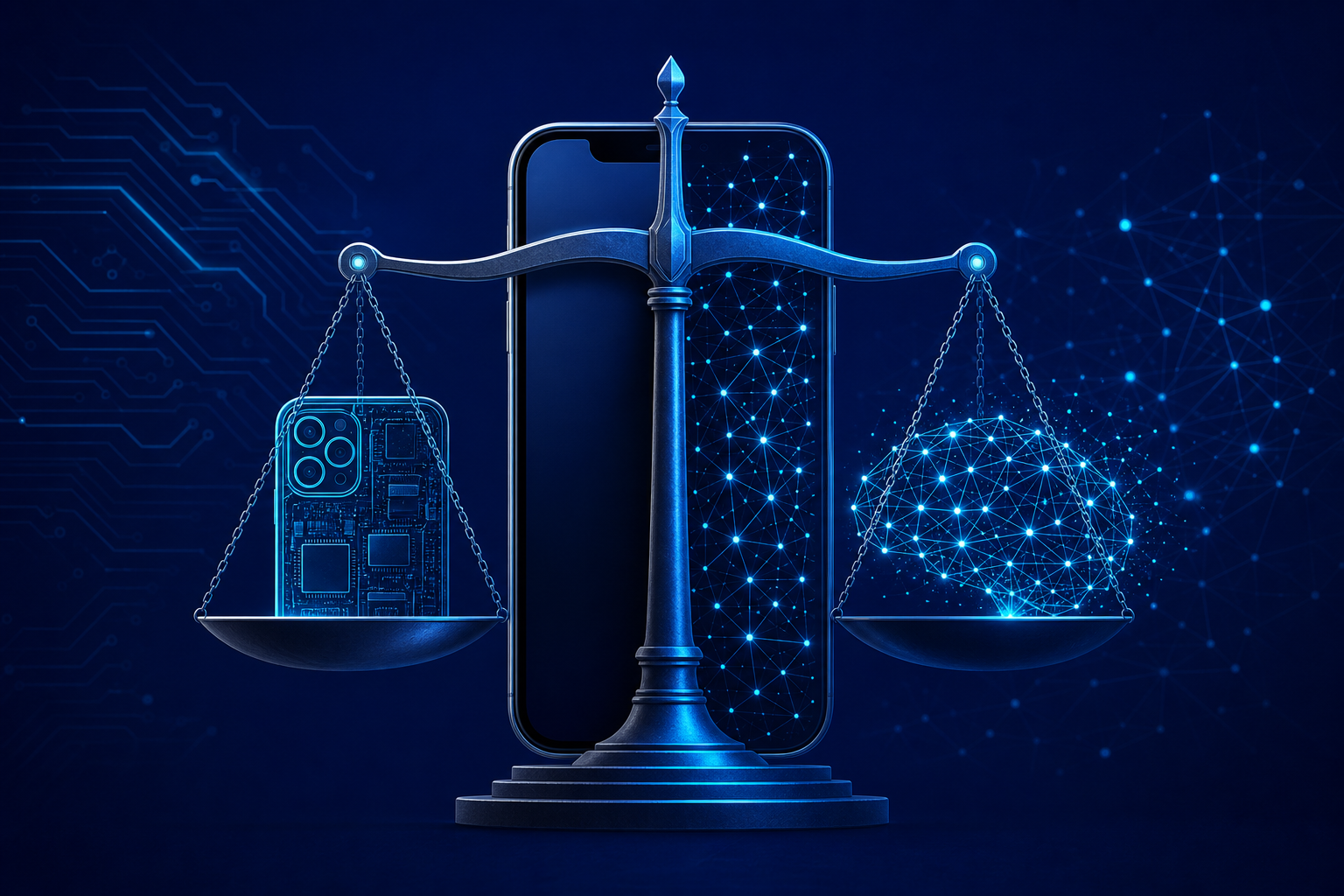
On July 10, 2026, Apple Inc. filed a lawsuit in the U.S. District Court for the Northern District of California against OpenAI and related defendants, alleging trade secret misappropriation and breach of contract. The complaint focuses on Apple's hardware know-how — unreleased products, processes and supply-chain practices — as OpenAI builds its own device business after acquiring Jony Ive's io.
Apple has not published a $230 billion damages figure in the complaint. The company asks the court for injunctions, return of confidential materials, evidence preservation, and unspecified damages. The case is still early, but it pits two of the industry's most powerful players against each other at a sensitive moment for AI hardware.
Why this matters: OpenAI's first consumer device is expected within the next year or so. If Apple's claims survive discovery, the lawsuit could delay that launch, complicate OpenAI's IPO plans, and reset how aggressively AI labs hire from Apple's hardware teams.
What Apple Alleges
According to the complaint and reporting by TechCrunch, The Verge, CNN and others, Apple says it uncovered "a pattern of theft" involving OpenAI employees who previously worked at Apple. Named defendants include OpenAI entities, IO Products (the former io hardware startup), Chief Hardware Officer Tang Yew Tan (formerly a longtime Apple VP for iPhone and Watch design), and Chang Liu, a former Apple systems electrical engineer who joined OpenAI in 2026.
- Recruiting pressure: Apple alleges Tan used confidential Apple project code names in recruiting, asked candidates about unannounced products, and urged some to bring hardware components, CAD artifacts or prototypes to interviews.
- Security evasion: The complaint claims OpenAI coached departing Apple employees on how to evade Apple's exit and security procedures.
- Downloaded documents: Apple alleges Liu failed to return an Apple-issued laptop and used it to download technical documents about unannounced technologies and products, then shared guidance with other Apple staff interviewing at OpenAI.
- Supply-chain know-how: Apple says OpenAI and partners used confidential information in hardware development — including a proprietary metal-finishing technique after allegedly misleading a partner into believing it had Apple's permission.
"At Apple, our teams are constantly developing breakthrough technologies… Recently, significant evidence has emerged suggesting individuals employed by OpenAI wrongfully took Apple's secret and confidential information regarding our unreleased technologies, processes, and products." — Apple prepared statement, July 2026
OpenAI's Response
OpenAI has denied interest in other companies' trade secrets. In a public statement shared after the filing, the company said: "We have no interest in other companies' trade secrets. We remain focused on building innovative technology that empowers people everywhere."
There is no verified public report of a $50 billion OpenAI countersuit as of this writing. Expect discovery battles over recruiting emails, device logs and partner contracts before any trial date.
What This Means Beyond Cupertino
Scenario 1: You use ChatGPT on an iPhone
Apple and OpenAI still partner on ChatGPT integration in Apple Intelligence. That commercial relationship can coexist with a lawsuit — but prolonged conflict could chill product roadmaps or renegotiations.
Scenario 2: You build AI hardware
Startups hiring from Apple, Google or Samsung will face stricter exit processes and NDA enforcement. "Bring your prototype to the interview" culture, if real, will become a legal liability.
Scenario 3: You invest in AI platforms
OpenAI's hardware bet — and any IPO narrative built on a distinctive device — now carries litigation overhang. Markets will price uncertainty until injunctions or settlements clarify the risk.
Stakes for AI Hardware
- Device competition: Analysts have speculated about an OpenAI smartphone or screenless AI speaker. Apple frames the suit as defending decades of hardware IP against a rival building a competing product line.
- Talent wars: The case highlights how poaching senior Apple hardware talent can trigger trade-secret claims even without copying source code.
- Partner networks: Allegations about metal finishing and vendor processes show that Apple's supply chain is itself treated as a trade secret.
- Discovery as strategy: By suing, Apple gains legal tools to learn what OpenAI holds — "the tip of the iceberg," in the complaint's words.
What Comes Next
Short-term (1–2 years)
Motions to dismiss, discovery fights, and possible preliminary injunction requests. OpenAI's device timeline and IPO process may face added scrutiny.
Mid-term (3–5 years)
Settlement is common in trade-secret cases — often with hiring restrictions, independent monitors, or design-around commitments. A full trial would set rare public precedent on AI-era hardware IP.
Long-term (10+ years)
If AI companies become full device makers, expect more Apple-style suits whenever talent and process know-how cross company lines. The boundary between "industry knowledge" and "trade secret" will keep being redrawn in court.
Implications
Possible upsides
- Clearer norms: Courts may clarify what ex-employees may and may not discuss in interviews.
- IP investment: Stronger enforcement can reward firms that spend decades on process and supply-chain innovation.
Risks
- Chilled mobility: Engineers may face heavier exit surveillance and slower career moves.
- Product delays: Injunctions could slow OpenAI hardware — and raise consumer prices if competition shrinks.
- Partnership friction: Apple–OpenAI software collaboration and hardware rivalry create an awkward dual relationship.
Conclusion
Apple's suit against OpenAI is a real, high-stakes trade-secret case about hardware — recruiting practices, unreleased product data, and manufacturing know-how — not a fictional $230 billion fight over prompt engineering or ChatGPT's UI.
Whatever the outcome, the lawsuit signals that as AI companies enter the device business, they will inherit the same IP warfare that has long defined consumer electronics. Protecting innovation and preserving fair competition will both depend on how carefully courts draw that line.
Sources
- TechCrunch (July 10, 2026) — Apple sues OpenAI over alleged trade secret theft
- The Verge (July 2026) — Apple sues OpenAI for allegedly stealing hardware secrets
- CNN Business (July 10, 2026) — Apple accuses OpenAI of using stolen trade secrets for AI gadgets
- DocumentCloud — Complaint for Trade Secret Misappropriation and Breach of Contract